
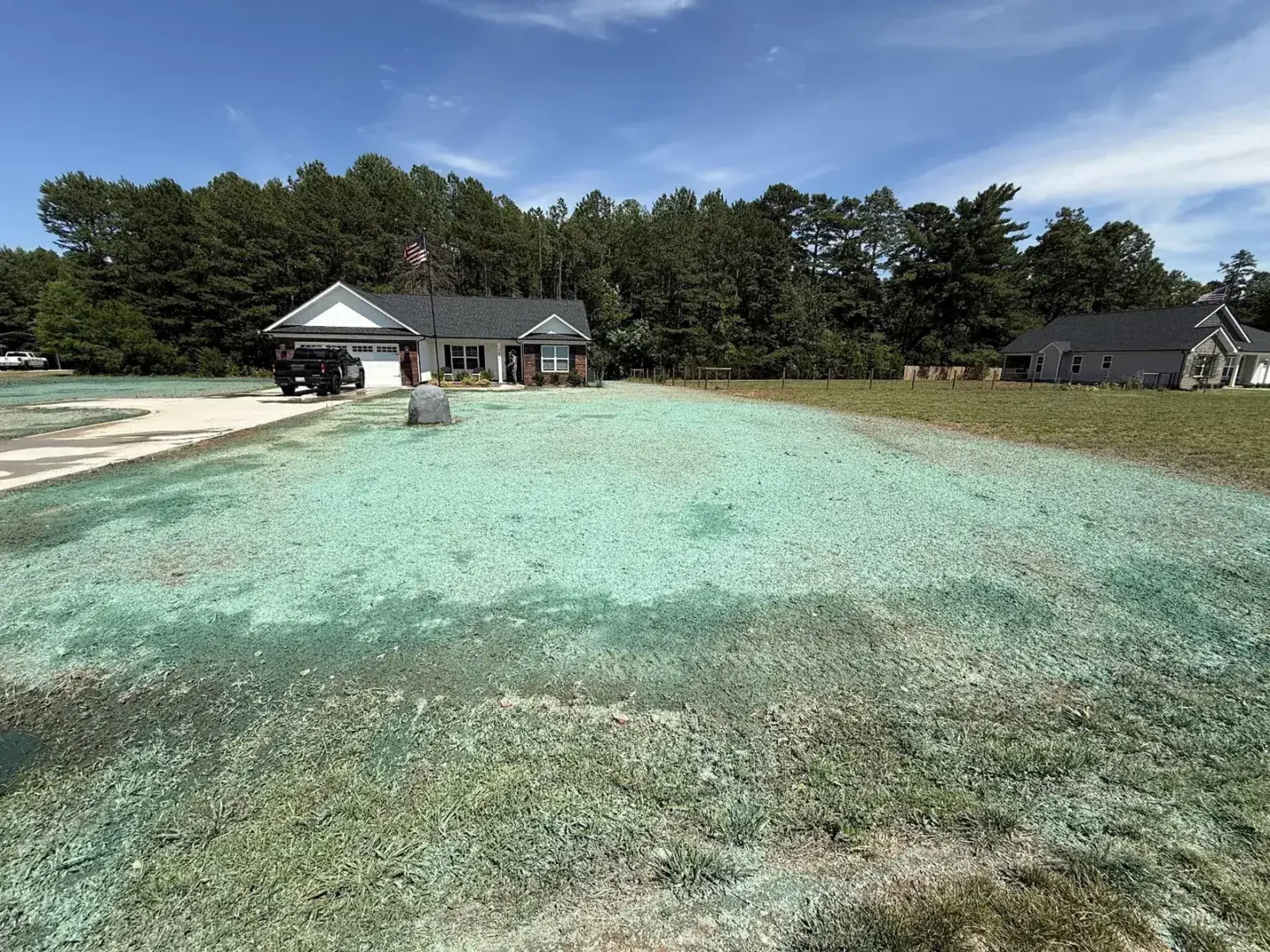
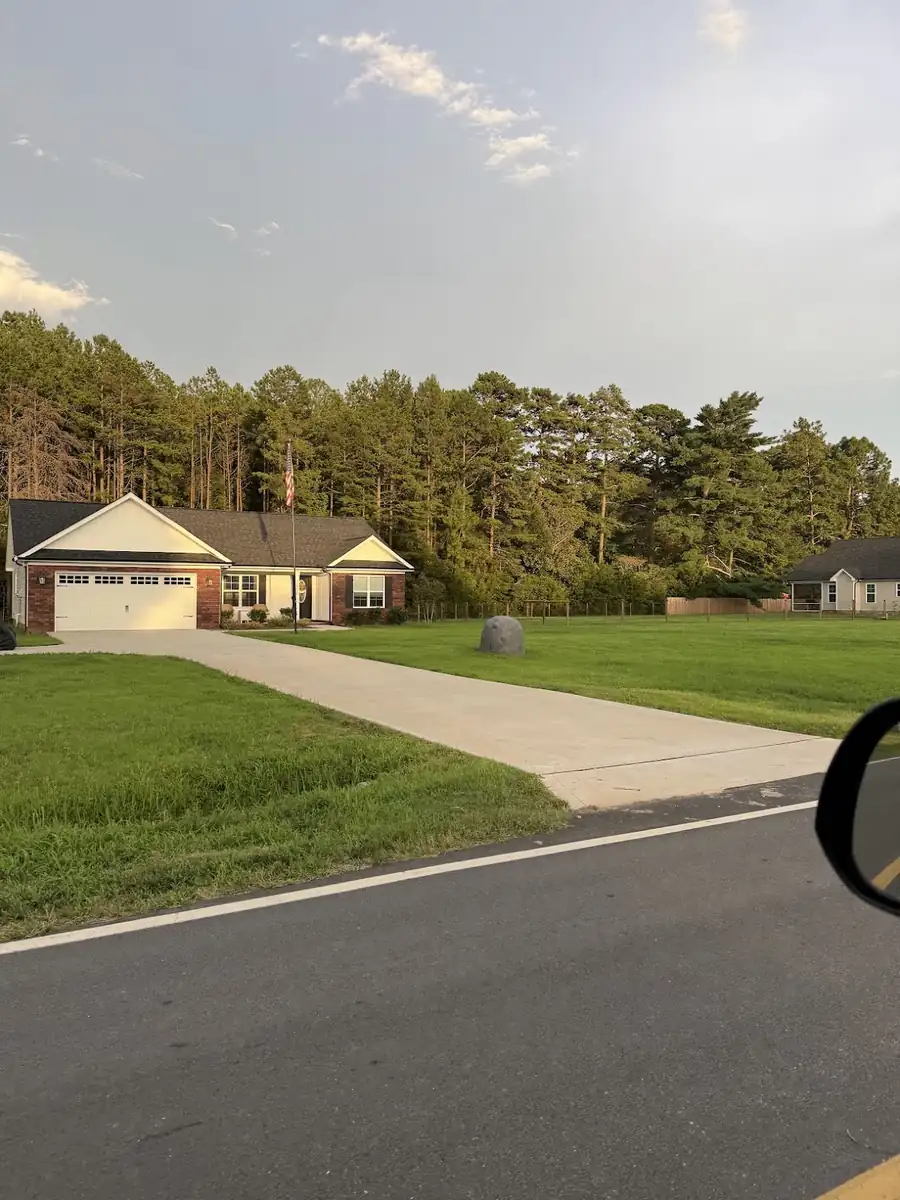
Hydroseeding Before & After
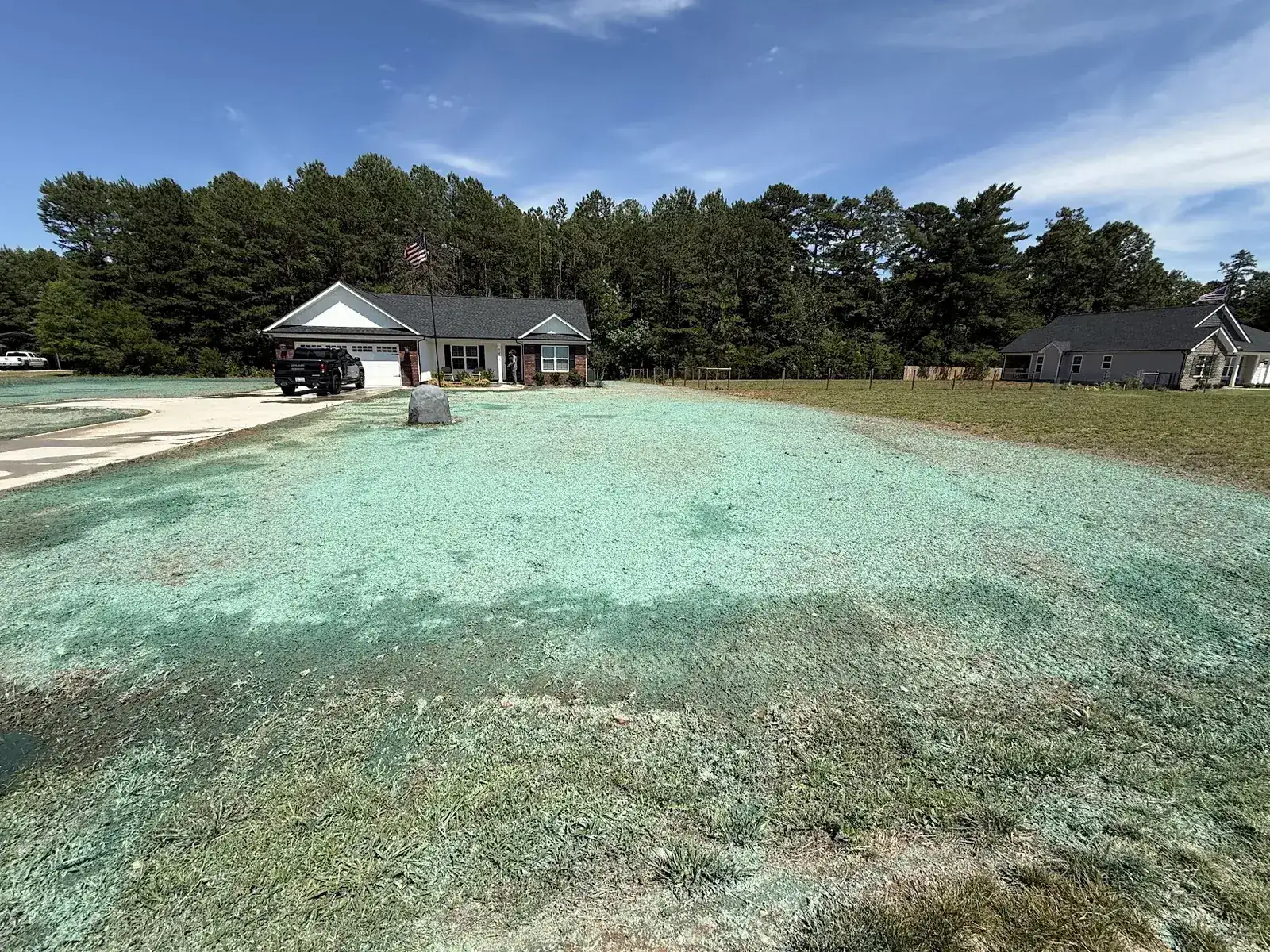
Bare dirt left behind after grading, clearing, or construction doesn’t just look unfinished — on Rowan County’s sloped, clay-heavy ground, it washes out in the first hard rain. Jenkins All Terrain LLC provides hydroseeding services across the 60-mile radius around Landis and China Grove, spraying a seed, mulch, and fertilizer slurry over bare ground to establish grass faster and more affordably than sod, and to get erosion control in place before North Carolina’s groundcover deadlines come due. Call (980) 400-2223 or request a free estimate to get your bare or thin lawn area evaluated.
What Hydroseeding Actually Involves
Hydroseeding sprays a slurry — a mix of grass seed, wood or paper mulch, fertilizer, and a tackifier that helps everything bond to the ground — over prepared soil using a tank-mounted hydraulic sprayer, in a single pass that would take far longer with dry broadcast seeding and separate mulching. The process starts with light grading or raking to loosen and level the soil surface, since seed-to-soil contact drives germination; any large debris or rock is cleared first. The slurry is mixed on-site to the right consistency and sprayed in a uniform layer that coats the ground evenly, unlike hand-broadcast seed, which tends to clump and leave gaps.
The mulch component of the slurry does double duty — it holds moisture around the seed to speed germination, and it protects the soil surface from washing away in rain before grass roots take hold, which is the main reason hydroseeding is used for erosion control on slopes and bare construction areas, not just for starting new lawns. Compared to sod, hydroseeding costs meaningfully less and still gets grass established within a growing season; compared to dry seeding, it germinates faster and holds up far better against wash-out on the kind of graded slopes common after a driveway, house pad, or grading project in this region. Seed selection also matters for the Piedmont — a blend suited to North Carolina’s clay soil and transitional climate zone establishes more reliably than a generic all-purpose mix, and fescue and Bermuda blends are chosen differently depending on whether the area gets full sun or shade and how the property owner intends to use the space afterward.
Our Hydroseeding Process
Step 1 — Site Walk & Free Estimate. Mason evaluates soil condition, slope, and drainage, and confirms whether hydroseeding alone will establish grass or whether some additional grading is needed first.
Step 2 — Soil Prep. The area is lightly graded or raked to loosen the surface and remove debris, giving the seed direct contact with soil rather than sitting on top of compacted clay.
Step 3 — Slurry Mixed On-Site. Seed, mulch, fertilizer, and tackifier are mixed to the right consistency in the hydroseeding tank immediately before application, matched to the site conditions and grass type needed.
Step 4 — Uniform Application. The slurry is sprayed evenly across the entire area in a single pass, providing consistent coverage that hand-broadcast seeding typically can’t match.
Step 5 — Germination & Establishment. The mulch layer holds moisture and protects the seed as it germinates, typically within one to three weeks depending on season and grass type, turning bare, erosion-prone dirt into an established, stable lawn or slope.
Serving China Grove and the Surrounding Area
Jenkins All Terrain hydroseeds new-construction lawns and bare slopes throughout the growth corridor around Kannapolis, Concord, and Mooresville, where new-build homes on former farmland routinely leave bare, graded clay exposed to erosion until groundcover is established. Closer to China Grove, Landis, and Salisbury, hydroseeding is often the last step after a grading or driveway project, and out toward Statesville and the more rural areas around Cleveland and Gold Hill, it’s frequently used for pasture edges and cut slopes after excavation work. Rowan County’s dense red clay drains slowly and erodes fast when bare, which makes fast groundcover establishment more valuable here than in sandier soil that holds together better on its own.
Why China Grove Homeowners Choose Jenkins All Terrain
Hydroseeding at Jenkins All Terrain is usually the last chapter of a larger site work story — grading, clearing, or excavation work the crew has already done, finished off with the erosion control and lawn establishment that keeps the finished grade from washing away. That full-sequence approach is part of what’s built the business’s 37 five-star Google reviews and its residential, quality-first reputation. [VERIFY: current licensing and insurance details before publishing.]
North Carolina law requires permanent groundcover on any disturbed area of one acre or more within 15 working days or 90 calendar days of the disturbance, whichever is shorter, under the NC DEQ erosion and sediment control rules — hydroseeding is one of the fastest ways to meet that deadline compared to waiting on sod installation or slow dry-seed germination. Seed mix and application rates are selected based on NC DEQ’s temporary and permanent seeding specifications for the Piedmont region. Learn more about the team on our About Us page, or see our grading and land clearing pages for the work that typically comes before hydroseeding.
What Our Customers Say About Our Hydroseeding
Jenkins All Terrain’s 37 five-star Google reviews include lawn establishment and erosion control work following grading and construction projects across Rowan County.


