A pasture or back field that hasn’t been cut in a year or two doesn’t just look overgrown — it becomes a fire hazard, a tick and snake habitat, and eventually a small forest if it’s left alone long enough in Rowan County’s long growing season. Jenkins All Terrain LLC provides bush hogging services across the 60-mile radius around Landis and China Grove, cutting overgrown fields, pastures, and lots back down to manageable ground. It’s routine maintenance work for landowners who want to keep pasture or open land from reverting to brush without the cost of a full forestry mulching or land clearing job. Call (980) 400-2223 or request a free estimate to get your field or lot scoped.
What Bush Hogging Actually Involves
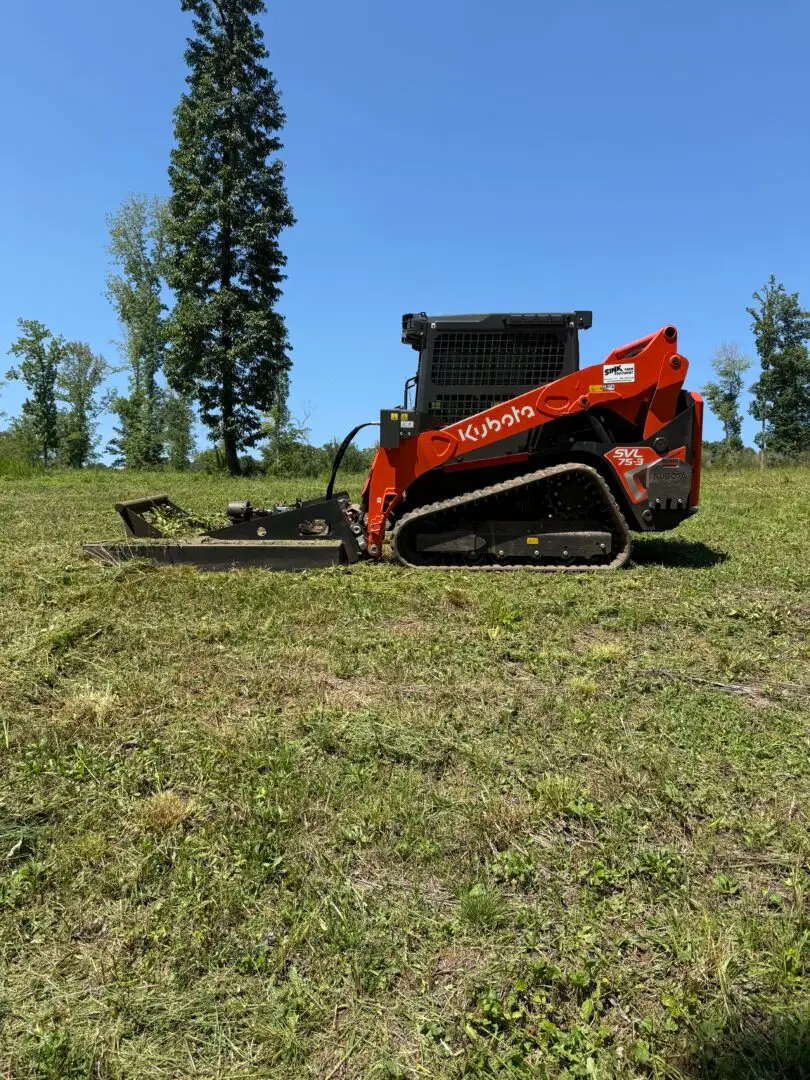
Bush hogging uses a heavy-duty rotary cutter — commonly called a brush hog — mounted on a tractor to cut through tall grass, weeds, saplings, and light brush that a standard mower can’t handle. Unlike forestry mulching, which grinds vegetation into fine mulch and can take down small trees, a bush hog cuts and chops material and leaves it on the surface to break down naturally, making it a lighter-duty, lower-cost option suited to maintaining pasture, fields, and lots rather than reclaiming heavily wooded ground from scratch. The process starts with a walk of the field to check for hazards — fence posts, rocks, holes, or debris that could damage the cutter or the tractor — then the tractor works the field in overlapping passes, typically cutting from the outside edge inward. Cutting height and frequency matter for the health of the ground underneath: cutting too short or too often can stress pasture grasses and strip habitat value, while going too long between cuttings lets woody growth get ahead of what a bush hog can handle in one pass, at which point forestry mulching becomes the better tool. For landowners maintaining pasture, fence lines, or fields against reverting to brush, regular bush hogging — typically a few times a year during the growing season — is far cheaper than letting growth get away and needing a mulching or clearing job to reset it.
Our Bush Hogging Process
Step 1 — Field Walk & Free Estimate. Mason walks the field or lot to check for hazards — fence posts, rocks, holes, downed limbs — and confirms bush hogging is the right tool for the vegetation, rather than forestry mulching if growth has gotten too woody.
Step 2 — Hazard Marking. Anything that could damage the cutter or create a safety issue is flagged or marked before the tractor starts, protecting both the equipment and the field.
Step 3 — Cutting in Overlapping Passes. The tractor works the field systematically, typically starting at the perimeter and working inward, cutting overgrown grass, weeds, and light brush down to a manageable height.
Step 4 — Debris Left to Break Down. Cut material is left on the surface where it naturally breaks down and returns organic matter to the soil, rather than being hauled off, which keeps the job efficient and affordable.
Step 5 — Field Restored to Usable Ground. What was chest-high grass and brush is now open, walkable, usable pasture or field — ready for grazing, mowing maintenance, or simply keeping the property from reverting to woods.
Serving China Grove and the Surrounding Area
Jenkins All Terrain bush hogs pastures, fields, and overgrown residential lots throughout the rural stretches around Cleveland, Gold Hill, and Rockwell, where working farms and larger acreage are common, as well as smaller overgrown lots closer to China Grove, Landis, and Salisbury. Out toward Kannapolis, Concord, Mooresville, and Statesville, bush hogging often applies to vacant residential lots or newly purchased acreage being kept clear ahead of future building plans. Rowan County’s long growing season — roughly 210 frost-free days a year — means fields here get away from landowners faster than in cooler climates, which is why regular bush hogging matters more here than a once-a-year cut.
Why China Grove Landowners Choose Jenkins All Terrain
Bush hogging is straightforward maintenance work, but Mason approaches it the same way as every other service — walking the field first rather than just showing up and cutting, because the wrong cutting height or timing can do more harm than good to pasture grass and ground-nesting wildlife. That attention to detail is part of the quality-over-quantity approach reflected in the business’s 37 five-star Google reviews.
For landowners who want to support ground-nesting birds and pollinators on their property, the NC Wildlife Resources Commission recommends limiting mowing of fields and rights-of-way to a window in early-to-mid spring, and avoiding cuts during peak nesting season where possible — something Jenkins All Terrain is happy to plan around for landowners who care about it. Learn more about the team on our About Us page, or see our forestry mulching and land clearing pages for when growth has gotten past what a bush hog can handle.
What Our Customers Say About Our Bush Hogging
Jenkins All Terrain’s 37 five-star Google reviews include pasture, field, and lot maintenance work across Rowan County.


